12.03.2025 1824

Monitoring of Heat Meters with LoRaWAN: How IoT Helps Manage Heating

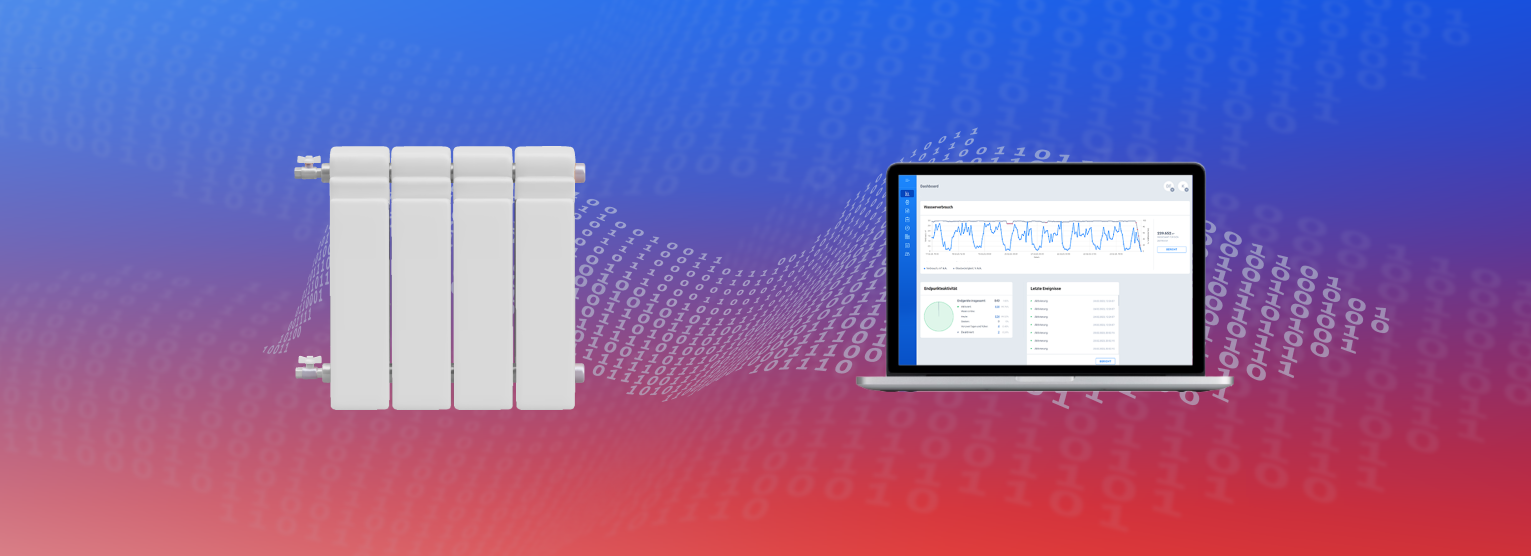
Modern IoT solutions play a significant role in optimizing heating systems, reducing costs, and creating a comfortable environment for users. In this article, we explain how the use of the LoRaWAN standard for monitoring heat meters and the implementation of Smart heat meters with LoRaWAN help optimize resource management and enable prompt adjustment of heating system parameters.

How Heat Providers Can Implement Remote Data Monitoring

Thanks to Remote heat monitoring via IoT, data is collected in real time, allowing immediate detection of malfunctions and prompt adjustments to the operation of equipment. This capability enables heat providers to identify failures in heat exchangers, quickly address heat losses in residential buildings or along district heating networks, and reduce the number of service visits.

The LoRaWAN for heat meter monitoring technology ensures a stable wireless connection over long distances and reliable transmission of real-time data. Utilizing the Internet of Things in heating system management—IoT in heating system management—allows all heat meters to be integrated into a single information system. This integration enables effective resource optimization as providers can centrally analyze heat consumption, plan preventive maintenance, and optimize service routes. Moreover, real-time heating control with LoRaWAN allows the system to automatically adjust temperatures based on weather conditions and peak consumption, reducing energy costs and enhancing residents’ comfort.

Thus, by implementing LoRaWAN for efficient heating, providers gain several advantages:

  • System Optimization: Automated data collection and analysis enable rapid responses to changes in equipment performance, supporting Advanced IoT heating management.
  • Cost Reduction: Fewer service visits means lower maintenance and repair expenses.
  • Enhanced Energy Efficiency: Integrating data from various sources allows for more precise system adjustments, reducing heat losses and boosting overall energy efficiency—one of the key benefits of IoT in heating systems.

How Heat Providers Can Implement Remote Data Monitoring

To deploy an automated data monitoring system, heat providers should follow these steps:

1. Select the appropriate equipment: Choose devices such as smart heat meters with LoRaWAN or specialized radio modules that can be integrated into existing meters, ensuring robust wireless communication.

2. Install and configure LoRaWAN gateways: Set up the gateways (or other compatible devices) to guarantee stable data collection over a wide area, forming an efficient IoT network.

3. Set up the software platform: Typically, this is a cloud-based or local system where meter readings are displayed, reports are generated, and consumption analytics are gathered.

4. Train the personnel: Educate employees on how to use the new system, process the data, respond to alerts about abnormal situations, and maintain the database to gain the maximum benefit from your automated systems and resource optimization.

Engaging End Users: What to Consider

Along with technical aspects, it is important to communicate the benefits of remote monitoring to end users. Providers should emphasize the following advantages:

  • Convenience and Accuracy: Users no longer need to spend time submitting readings manually. With automatic data collection, no reading is missed and errors are eliminated—highlighting the Benefits of LoRaWAN for heating.
  • Transparency: Billing is based on actual consumption, allowing residents to see exactly how resources are used and enabling them to consciously manage their heating expenses.
  • Comfort: Remote monitoring reduces the frequency of service interruptions and heating failures, as issues and leaks are detected automatically, ensuring efficient heating control.

By showing customers that the system saves time, effort, and money while increasing reliability and comfort, heat providers can build a loyal customer base and ensure more stable operation of their enterprise.

Optimizing heating with LoRaWAN opens up new horizons in the management of thermal resources. In heating system management, the Internet of Things helps providers optimize processes, reduce costs, and ensure a high level of comfort for users. The integration of real-time data enables the creation of adaptive systems that can quickly respond to changes in operating conditions and ensure stable and efficient heating in buildings of any complexity.

Was it helpful?

262

Other articles

15.09.2026 / Aleksey Kuznetsov What Is IoT in a Smart City: An Explanation for Municipalities and Developers

A smart city is often imagined as an urban environment with automated lighting, intelligent parking systems, digital displays, and apps for...

Read more
07.09.2026 / Darya Pozharska Benefits of Smart Gas Metering for Resource Providers

Gas metering has long remained one of the most labor-intensive areas for resource providers. Until recently, data was collected manually by an...

Read more
03.09.2026 / a.igonin@infomir.com Jooby to Showcase Smart Infrastructure Solutions at Enlit Europe 2026

Jooby will participate in Enlit Europe 2026, taking place on 10–12 November at Messezentrum Vienna in Vienna, Austria. We invite you to visit...

Read more
25.08.2026 / Darya Pozharska Integrating LoRaWAN with SCADA systems: benefits and challenges

A SCADA system is a combination of software and hardware for supervisory control and management of technological facilities. It collects data from...

Read more
21.08.2026 / Darya Pozharska How to Assess Whether a Building or District Is Ready for IoT Implementation Before Purchasing Equipment

IoT implementation in a building, residential complex, district, or municipal infrastructure should never begin with the purchase of meters,...

Read more
10.08.2026 / Darya Pozharska How IoT dashboards turn metering data into management decisions

As the number of connected devices in utility infrastructure grows, the role of metering data is changing. Previously, the main task was to obtain...

Read more
22.07.2026 / Aleksey Kuznetsov 5 Key Use Cases for IoT in Urban Infrastructure

With requirements growing for energy efficiency, transparent billing, the quality of utility services, and the speed of response to emergencies,...

Read more
17.07.2026 / Aleksey Kuznetsov LoRaWAN in Multiservice Projects: Gas, Water, and Heat in One Network 

Remote meter reading rarely starts as a large-scale digital transformation. More often, it begins with a utility provider, developer, municipality...

Read more

Subscribe to our blog

Stay on top of the latest industry news

    By clicking Submit, you acknowledge that you have read and agree to our privacy policy.

    Your message has been sent successfully.

    Thank you, we have received your message. Our manager will contact you shortly.

    Jooby.Store: Shop Smart Metering Solutions

    Discover our remote metering devices, now available for retail purchase with delivery across Europe. Jooby.Store offers an extensive selection of intelligent radio modules and sensors for measuring gas, water, heat, and electricity consumption.
    Jooby.Store: Shop Smart Metering Solutions

    Making a request

    By clicking Submit, you acknowledge that you have read and agree to our privacy policy.

    Your request has been sent

    Thank you, we have accepted your request. In the near future the responsible manager will contact you and clarify the details of the order.

    Test en

      By clicking Submit, you acknowledge that you have read and agree to our privacy policy.

      Thank you!

      Our team will contact you soon