18.11.2026
 33
33
How Digital Metering Helps Utility Providers Manage Overdue Payments, Disputed Bills, and Customer Complaints
33
Overdue payments, disputed bills, and customer complaints are interconnected challenges for utility providers. A customer disputes the amount on a bill, the company checks the meter readings, investigates the discrepancy, and sends an inspector if necessary. While the investigation is ongoing, the outstanding balance may increase, and employees spend time retrieving data and approving billing adjustments.
Digital metering helps improve this process. Regular meter readings, consumption history, diagnostic events, and integration with billing systems make it possible to verify charges more quickly, identify errors, and provide well-supported responses to customer inquiries.
However, it’s important to distinguish between the technical and financial aspects of the issue: a metering system shows how much of a resource has been recorded, but it can’t independently determine why a customer has not paid or confirm that a debt exists.
According to Eurostat, approximately 7% of the population in the EU lived in households with overdue utility bills in 2025. The indicator covers payments for water, heating, gas, and electricity. While this doesn’t represent the proportion of unpaid bills or the outstanding debt of individual utility providers, it does illustrate the scale of payment difficulties.
Another important indicator relates to the development of digital infrastructure. According to a report published by the UK’s Environment Agency in October 2026, the proportion of households in England equipped with smart water meters using AMI infrastructure reached approximately 20% in the 2025–2026 reporting year, compared with around 12% a year earlier. These systems enable more frequent meter readings and help investigate consumption and leakage issues.
For utility providers, the value of these technologies goes beyond automating meter reading. Digital metering creates a verifiable consumption history that can support the handling of customer inquiries, billing issues, and outstanding payments.
One common cause of disputes regarding billing accuracy is a discrepancy between the amount on a bill and the customer’s understanding of their actual consumption. With manual metering, readings may arrive late, contain errors, or be unavailable during the billing period. In such cases, the billing system may use estimated average consumption values, requiring an adjustment once actual readings become available.
A remote meter reading system helps reconstruct the sequence of events: when data was received, what consumption volume was recorded, whether communication interruptions occurred, which values were transferred to the billing system, and what data was used to calculate the charges.
A complete investigation using meter data to resolve billing disputes requires comparing four elements:
It’s also important to remember that a message delivery timestamp doesn’t always correspond to the time of measurement. If a radio module transmits stored data after connectivity is restored, the system must correctly account for when the readings were recorded.
This makes it possible to distinguish errors in meter readings from utility billing errors or payment processing errors. The final calculation however is performed by the billing system according to the applicable tariffs and rules of the relevant market.
A typical situation for water utilities is a complaint about unexpectedly high consumption. The customer claims that their usage has not changed, yet the bill is significantly higher than usual.
With hourly or daily consumption history, the operator can determine exactly when the increase occurred. For example, continuous nighttime consumption may indicate a faulty plumbing fixture or a hidden leak. A sudden increase following a prolonged period without readings may be associated with accumulated consumption that was not included in previous calculations.
Digital metering helps the water provider determine whether the billed amount corresponds to the recorded consumption and explain to the customer which period the anomaly occurred in.
Where both building-level and individual metering data are available, the water balance of the building can also be examined, although differences between readings should not automatically be classified as losses or unauthorised consumption.
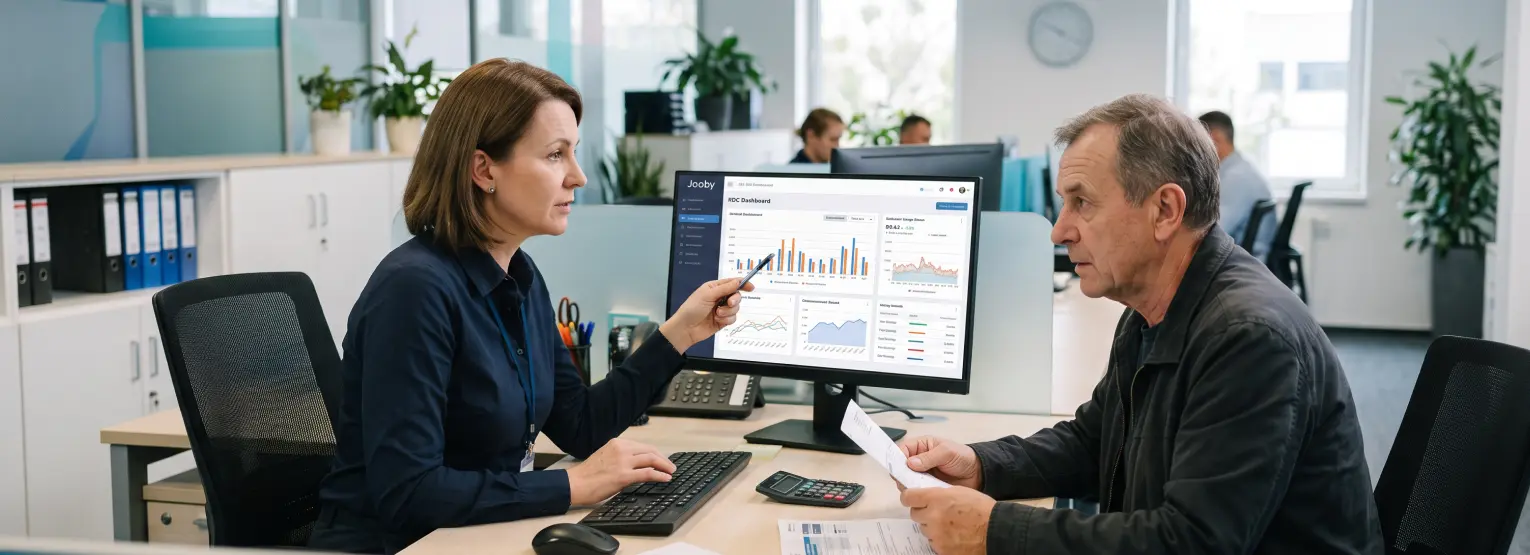
For such projects, the Jooby ecosystem includes smart water meters, radio modules, and sensors for existing metering devices. The collected data can be used to analyse consumption history and investigate customer inquiries through the Jooby RDC Dashboard.
In gas supply, disputes are often related to calculated consumption volumes, late submission of readings, or discrepancies between recorded values and customer-provided data.
Remote metering makes it possible to obtain recorded readings more frequently and reduce dependence on manual data submission. With any smart meter billing issues where a customer disputes a charge, the operator can examine the measurement history, periods of lost connectivity, and the data used to calculate the consumption volume.
Diagnostic events provide additional information. Depending on the model, Jooby radio modules for gas meters can detect magnetic interference or attempts to remove the device. While a tamper event alone does not prove that the recorded consumption volume was altered, these notifications help identify metering points that require an inspection. Confirmation requires a meter inspection and the procedures prescribed by applicable regulations.
This distinction is essential when managing outstanding payments. The company must separately establish the accuracy of metering, the validity of the charges, and the status of the customer’s account. Remote readings accelerate this verification process but do not replace it.
In electricity supply, detailed consumption data helps investigate complaints about sudden increases in bills, particularly when consumption depends on the time of day, seasonal patterns, and the operation of energy-intensive equipment.
If the meter supports interval data transmission, the operator can identify the hours when additional load occurred, compare consumption with previous periods, and determine whether time-of-use tariffs affected the final amount. For example, a higher bill may result not from an increase in total consumption but from a change in how consumption is distributed across tariff periods.
Accurate verification requires examining tariff register readings, timestamps, meter settings, and tariff changes. Analysing total consumption without this information may lead to incorrect conclusions.
Digital data also helps identify unusual metering point behaviour, such as abrupt changes in load, prolonged absence of readings, or enclosure-opening events, provided the equipment supports their detection.
For a utility provider, this makes it possible to identify the cause of a discrepancy more quickly and determine whether a technical inspection is required or whether explaining the billing procedure is sufficient.
Disputes over heating charges are often related not only to the amount of heat consumed but also to indoor temperatures, the duration of the heating season, shared building consumption, and the rules for allocating costs.
Remote metering enables regular collection of heat meter readings, comparison of consumption across periods, and identification of significant deviations. For example, if a building’s heat consumption increases sharply under comparable weather conditions, the supplier can examine data from the smart metering unit, equipment operation, and possible changes in operating conditions.
However, high heat consumption does not necessarily indicate a billing error or meter malfunction, which is influenced by outdoor temperature, building heat losses, heating system settings, and how the premises are used. Therefore, consumption analysis should ideally include weather data and the characteristics of the building.
In projects involving both building-level and individual metering, it’s particularly important to preserve measurement history and document the rules for allocating consumption. This helps explain the structure of charges and determine which issues fall under the responsibility of the heat supplier and which belong to the organisation maintaining the building’s internal engineering systems.
Remote meter reading doesn’t make customers pay their bills. Its purpose is to improve the reliability of the underlying data and help the company distinguish payment arrears from disputed charges.
For example, a customer may refuse to pay a bill because they believe the consumption volume is incorrect. Without current readings, investigating the complaint takes longer. If the company has access to measurement history, it can verify the basis for the charge more quickly, determine whether an adjustment is necessary, and provide a substantiated response.
In other cases, meter readings are confirmed, but payment has not been received. The issue then moves from the technical domain to the financial one: the company must check the customer account, received payments, outstanding balance, and legally permitted methods of resolving the debt.
For utility providers, it’s useful to divide customer inquiries into three categories:
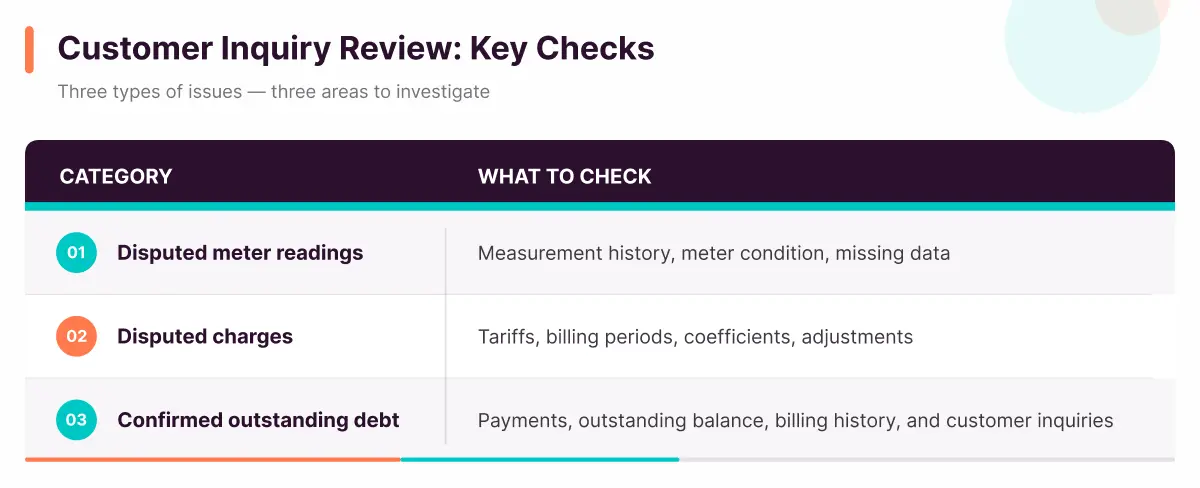
This classification allows requests to be directed immediately to the responsible specialist and prevents technical meter verification from being confused with debt collection procedures.
It’s also important to recognise that working with utility arrears using consumption data can’t reliably determine a customer’s ability to pay. Decisions about resolving outstanding debt should be based on verified financial information, contractual terms, and applicable legislation, rather than solely on algorithmic assessments of customer behaviour.
Installing radio modules alone is not enough to manage customer complaints effectively. Metering data, device information, customer accounts, and maintenance processes must be connected.
Within the Jooby ecosystem, remote meter reading is supported by smart meters, sensors, and radio modules using LoRaWAN and NB-IoT technologies. Data is transmitted through the appropriate communication infrastructure and can be processed in the Jooby RDC Dashboard.
The platform provides access to reading history and metering point records, supports event logs, device status information, and CSV data export. This allows measurement data to be used when investigating customer inquiries and preparing reports.
When integrated with a billing system, a utility provider can establish a consistent workflow: collecting readings, verifying data quality, calculating charges, reviewing customer inquiries, and recording the outcome.
The capabilities for automated data exchange, the fields to be transferred, and synchronisation rules must be agreed upon for each project. Jooby RDC Dashboard should not be considered a replacement for a billing system or utility debt management software.
The starting point should be operations that most frequently require manual verification, including retrieving current readings, reconstructing consumption history, identifying the causes of missing data, and preparing responses to customers.
The next step is to agree on data exchange rules with the billing system. The company must establish which data is considered reliable, when substitute values may be used for billing, who approves adjustments, and how changes are reflected in billing history.
After that, notifications can be introduced for issues such as missing readings by the billing cutoff date, unusual consumption changes, device diagnostic events, or discrepancies between metering data and the billing system.
The effectiveness of this approach to meter data management and billing disputes should be measured using specific indicators: the proportion of metering points with current readings by the end of the billing period, the number of manual adjustments, average complaint resolution time, the proportion of repeat inquiries, and the number of field visits per thousand metering devices.
A baseline value should be recorded for each indicator before implementation to assess the results after the system is launched.
Digital metering helps utility providers not only automate meter reading but also improve billing transparency, resolve complaints more quickly, and distinguish technical disputes from confirmed outstanding debt.
While the approach to smart meter data management differs for water, gas, electricity, and heat, the underlying principle remains the same: reliable measurements, accessible consumption history, accurate integration with billing systems, and clear procedures for investigating customer inquiries.
Jooby solutions can provide the foundation for this data exchange, helping utility providers reduce manual operations and make better-informed decisions, in particular regarding utility billing disputes.
Was it helpful?
 0


Stay on top of the latest industry news
Thank you, we have received your message. Our manager will contact you shortly.


Thank you, we have accepted your request. In the near future the responsible manager will contact you and clarify the details of the order.