29.04.2026
 4257
4257
4257
NB-IoT vs LoRaWAN: which technology to choose for smart metering in 2026
4257
In 2026, discussions about smart metering almost always start with how to ensure that data reaches the metering system from the meter reliably, predictably, and without excessive operational costs.
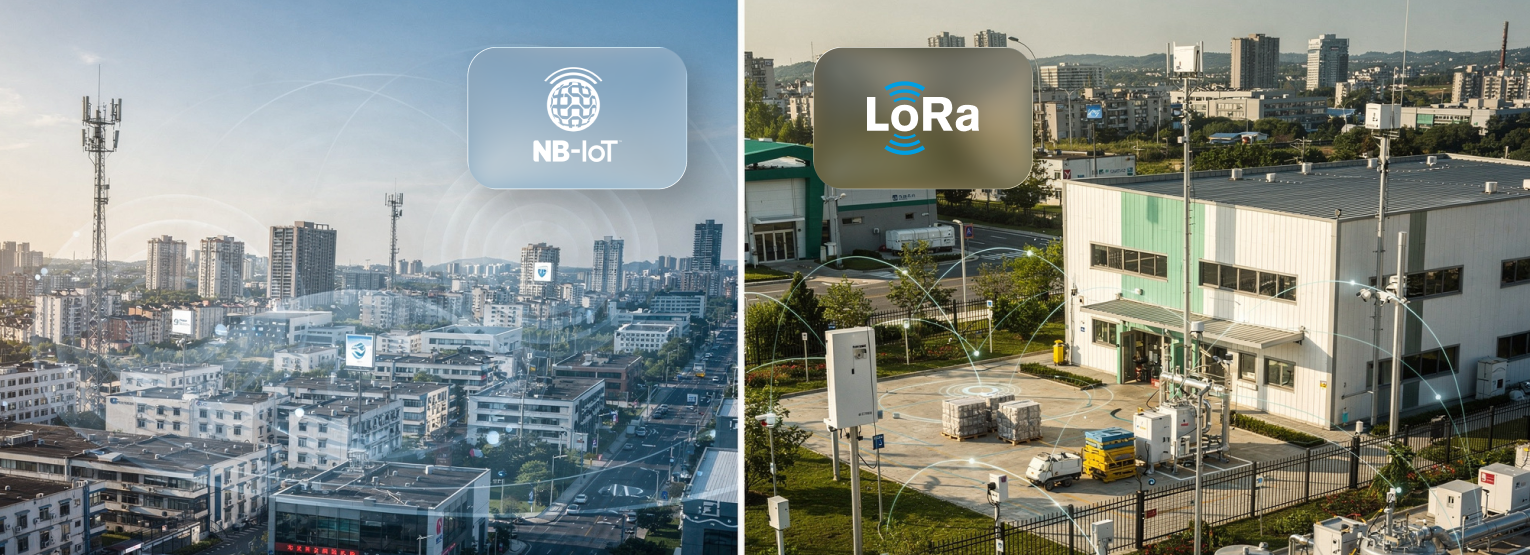
Two long-established leaders among LPWAN options are NB-IoT (cellular connectivity for IoT) and LoRaWAN (a radio network that can be deployed on your own infrastructure).
In this article, we make an in-depth NB IoT vs LoRaWAN comparison, highlighting the differences in how the two technologies behave in real deployments—differences that often determine overall project efficiency.
Meters, radio modules, and sensors can be selected quickly, but it’s a little more difficult to predict in advance the conditions in which connectivity will operate: basements, shafts, humid rooms, metal cabinets, dense urban development—or, at the other extreme—in sparse infrastructure and remote endpoints.
In other words, the discussion surrounding choice of technology is not only about devices, but about IoT sensors connectivity and how stable the link will remain for the next 7–10 years. This includes the expected battery life IoT devices can realistically deliver in the field.
While NB-IoT and LoRaWAN address the same requirement (transmitting metering data infrequently and reliably), they do so through different models.
NB-IoT is a cellular IoT network, and its main advantage is ready-made operator infrastructure. If the target area has solid coverage, you simply install the device, connect it to the meter, and data will start reaching the server through the operator’s network.
For a service provider, integrator, or HOA/condominium association team, this often simplifies IoT connectivity utility metering because there is no need to build and maintain a private radio network.
In the Jooby product line, this approach is implemented in NB-IoT radio modules—devices designed for automatic reading and transmission of data to the metering system via NB-IoT. In many projects, this is the shortest route to adopting NB IoT smart metering technology for remote meter reading and day-to-day utility data collection.
In practice, NB-IoT is often chosen when:
However, NB-IoT does have a downside, which is that coverage can be uneven. In some locations the network works well in basements and other hard-to-reach areas, while in others it requires validation or reinforcement. This is why teams looking at NB IoT vs LoRaWAN use cases typically verify IoT network coverage early.
In addition, there is dependence on tariffs and service terms. For metering this is usually not critical, but it is important to understand the model: the provider pays for connectivity and relies on the operator’s network—something that is typical for cellular IoT technology.
LoRaWAN is built differently, with its main strength being the ability to manage the infrastructure. The technology suits residential complexes, settlements, industrial sites, and districts with a high concentration of metering points.
In most cases it is easier and more cost-effective to install one or several LoRaWAN gateways, deploy a network server (or use a cloud platform), and connect dozens or hundreds of devices to this network.
Jooby offers a wide range of devices operating with this technology, enabling LoRaWAN smart meter solutions for requirements such as smart water metering and smart gas metering.
LoRaWAN is chosen not because it is “better,” but because it is more suited to a network-ownership scenario:
But there are some things to consider here as well. LoRaWAN almost always necessitates upfront engineering, as you will need to choose gateway locations, assess shielding by buildings and metal, and consider terrain and “radio shadows.”
In return however, the provider gains manageability. For utility projects and industry, this is often a decisive factor—especially when LoRa network deployment needs to be optimized for a specific territory.
In real operating conditions, the differences between the technologies are more pronounced—this is where LoRaWAN vs NB IoT smart metering decisions become clearer.
NB-IoT is often chosen as an option that relies on the mobile operator’s infrastructure. With stable coverage in the required locations, the solution can be deployed without building a private radio network, and efforts can focus on device connection and data integration into the metering system.
LoRaWAN typically involves building the network first (gateway placement and network-side setup), after which adding new endpoints within the same territory becomes simpler and more predictable. At sites with a high concentration of devices, this often reduces additional costs during further expansion.
The choice between the two technologies is therefore based on the specific project conditions. A hybrid approach is common: LoRaWAN is used where it makes sense to deploy a private network and there are many metering points, while NB-IoT is used for distributed or remote sites where relying on the operator’s network is more convenient.
The Jooby portfolio includes both LoRaWAN and NB-IoT devices. The manufacturer offers a wide range of radio modules, smart meters, and sensors compatible with the most common metering device models.
If needed, Jooby can deliver a turnkey project—from equipment selection and the connection scheme to a complete data collection and transmission architecture tailored to operating conditions.
For LoRaWAN-based solutions, base stations (gateways) are also available to build a private network on site, and all data is consolidated in a convenient platform where it can be centrally monitored, analyzed, and integrated into existing metering or dispatching systems.
Making an informed decision regarding the best use of NB-IoT and LoRaWAN can be done by using simple but practical criteria: how stable will connectivity be in a given environment and what will the deployment and ongoing operational costs look like—in older-building basements, boiler rooms, industrial sites, settlements with dispersed housing, or a distributed city-wide network of metering points.
This is how most teams begin evaluating the best LPWAN technology for utilities in their respective projects.
The advantage of Jooby’s approach is that the portfolio includes solutions for both NB-IoT and LoRaWAN. This makes it possible to choose the technology based on site conditions and project requirements.
In some cases it is reasonable to rely on the operator’s infrastructure, while in others it is better to deploy a private LoRaWAN network with gateways, gaining greater control over coverage and system scaling—an approach that fits naturally into any broader smart metering strategy.
Thank you for reading our LPWAN technologies comparison 2026, which we hope has been of help in understanding the main LoRaWAN vs NB IoT differences. We also hope it’s been of use in any decisions you might be taking in the future regarding smart metering and its associated technologies.
Was it helpful?
 1440
1440


Stay on top of the latest industry news
Thank you, we have received your message. Our manager will contact you shortly.


Thank you, we have accepted your request. In the near future the responsible manager will contact you and clarify the details of the order.