22.09.2025 293

Which Metrics to Collect from LoRaWAN Devices to Build an Effective Resource-Consumption Model

Accurate resource-consumption models underpin managed tariffs, capacity planning, and loss reduction. LoRaWAN data collection gives utilities and municipalities regular, affordable, and scalable datasets: radio modules on meters transmit readings without site visits, and an analytics platform turns device telemetry analysis into management decisions.

In this article, we explain exactly which consumption metrics IoT teams should gather and how to use them. As an example, we consider Jooby radio modules and software, which allow you to configure sending frequency, add diagnostic events, and aggregate data in the Jooby RDC Dashboard for utility consumption tracking.

Why model consumption on “fine-grained” data

Single monthly readings poorly reflect network and customer behavior. That’s because leaks remain invisible, load peaks are hidden in averages, and mid-month tariff changes produce disputed calculations. 

Monthly accounting can be seen as a “snapshot,” but smart metering LoRaWAN provides a “video stream” of short intervals that reveal baseload, peaks, deviations, and the effect of interventions (e.g., lighting dimming or heat balancing). This allows you to run real-time monitoring, track anomaly detection, and compute KPIs for tariff policy and efficiency programs.

Core metrics without which the model is incomplete

Below is a list of metrics you should prioritize.

Business metrics (per metering point)

  • Timestamp with timezone/UTC and strict sequencing; cumulative meter index and/or interval consumption — the foundation of calculations and data logging.
  • Identifiers: resource (water/gas/heat/electricity), device ID, K-factor/pulse weight, location (address, DMA/substation, coordinates if available).
  • Process events: tariff change, tamper/opening, power loss, reverse flow, seal break, magnetic influence, emergency flags (leak/burst/freezing).
  • Interval load profile: min/max/mean, percentiles, peak duration — the basis for forecasts and dynamic tariffs and consumption forecasting.

Industry parameters (added by resource type)

  • Water: instantaneous flow, pressure (at point/before-after reduction), water temperature, flags “dry run/reverse flow,” micro-leak indicators — core to water metering.
  • Heat: heat-carrier flow, supply/return, ΔT, thermal power, differential pressure, valve position (if available).
  • Gas: volume under operating and/or base conditions, inlet temperature/pressure (for correction), tamper flags — useful for gas usage modeling.
  • Electricity: active/reactive energy, demand, voltage/current/power factor, losses/phase imbalance (for street-lighting assets and power consumption analysis).

LoRaWAN service metrics that improve model reliability

To keep forecasts from breaking due to telemetry gaps, collect network and device indicators alongside business data. These help detect “silent” devices and plan maintenance, improving network reliability and data accuracy.

Recommended set

  • Battery level/voltage, reboot counter — assessing remaining life.
  • RSSI/SNR, DR/SF, TX power, ADR status, number of gateways receiving a packet — channel-quality indicators (crucial for causal analysis of data gaps and network performance LoRaWAN).
  • Deliverability: share of successful uplinks, retransmissions, latency from measurement to reception, duplicate ratio (after LNS deduplication).
  • Versions: firmware/configuration (polling frequency, event masks), configuration-change marker — for reproducibility and audit of the predictive consumption model.

Frequency, energy use, and the “battery-economy” trade-off

The more often a device transmits, the richer the time features and the more sensitive the anomaly detection — but at the expense of the battery. In practice, combine baseline profile transmissions (e.g., once daily) with event telemetry (immediate uplink on leak, opening, sharp rise in flow/pressure).

Jooby radio modules support sleep mode and flexible schedules; interval changes are performed remotely. In pilots, A/B-tune intervals to balance forecast gains against actual battery draw.

How to turn metrics into actionable decisions

Numbers mean little without context. Add weather features for heat and electricity (how cold/hot, wind), calendar/behavior for water (day of week, seasonality, irrigation), and dusk/traffic data for lighting. Then segment consumers (multi-family, detached housing, social facilities), compute “normal” consumption and typical peaks, build simple forecasts, and mark deviations — enabling consumption forecasting that operations can trust.

This then turns into actions:

  • Energy and tariff planning. Use forecasts to shape load schedules, pre-purchase required volumes (for gas), and introduce flexible tariffs and concessions during low-load hours — supported by real-time monitoring dashboards.
  • Water and heat network management. Divide the city into manageable zones to localize losses and tune modes: reduce pressure where excessive and balance heat (supply/return) — informed by sensor telemetry and pressure/flow histories.

Project effect evaluation. Quantify savings from valve replacement, insulation, or dimming “honestly”: compare actual outcomes with a counterfactual “without project,” controlling for weather and seasonality.

How it works in practice

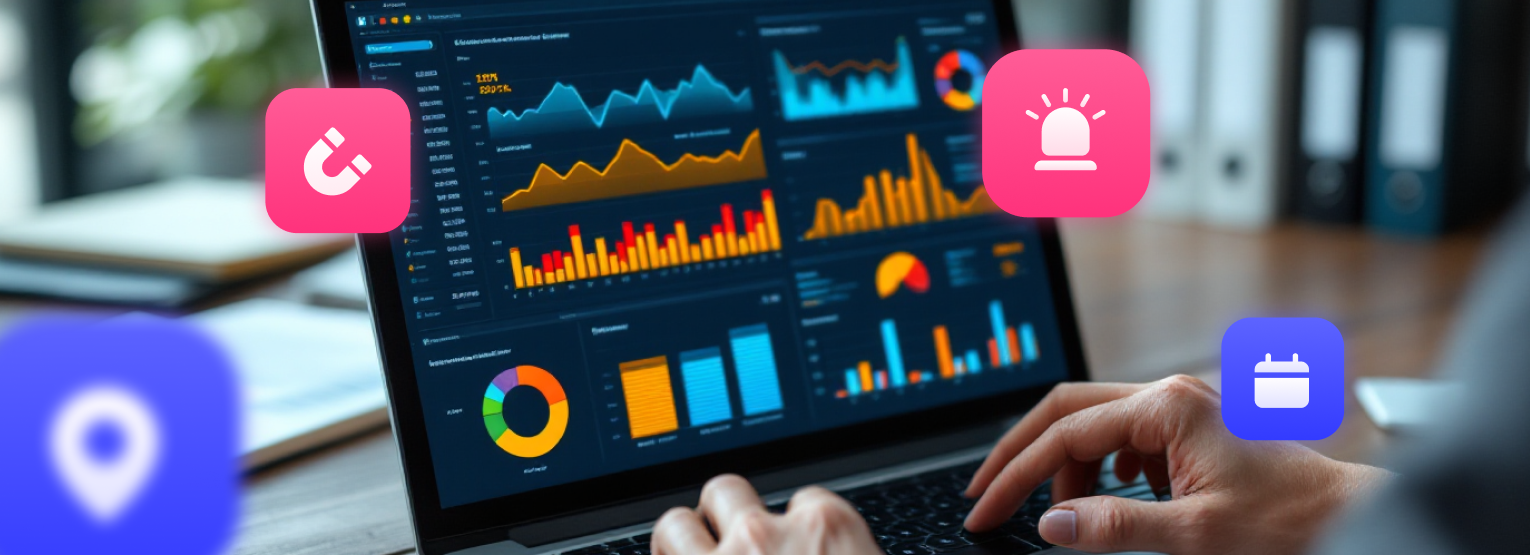
Sites host meters with Jooby radio modules (water, gas, heat, electricity) and sensors (pressure, temperature, tamper). They send packets via Jooby gateways (LoRaWAN) to the network server; data then flows into the Jooby RDC Dashboard or a corporate store/BI via API for device telemetry analysis.

These systems automatically check data quality:

  • completeness — did all readings arrive;
  • timeliness — did they arrive on time;
  • plausibility — do values look realistic.

The metric list and precise definitions are recorded in a data catalog so models are reproducible and results can be correctly interpreted by tariff teams and auditors.

Where to start

Select 2–3 representative zones (e.g., a multi-family block, a street-lighting corridor, and a water-distribution section), install 200–300 Jooby radio modules and one or two gateways. In the pilot, collect core metrics and LoRaWAN service indicators, fix a baseline, and train the first models. After validation, scale standard profiles across districts while standardizing device dictionaries, polling frequencies, and data-delivery SLAs.

An effective consumption model needs more than a “number off the meter”; it needs context — time, events, physical network parameters, and link quality. LoRaWAN devices paired with Jooby modules and platform provide this context out of the box: regular telemetry, diagnostic flags, network indicators, and open APIs. 

With the right metric set, utilities and municipalities gain predictable budgets, evidence-based tariff policy, and managed loss reduction — all based on comprehensive and robust IoT data for analytics. Meanwhile, residents see transparent and fair bills powered by smart metering LoRaWAN.

Was it helpful?

64

Other articles

13.11.2025 / Darya Pozharska Jooby to Present Smart Infrastructure Solutions at Enlit Europe 2025

Jooby will participate in the international Enlit Europe 2025 exhibition, taking place on 18–20 November in Bilbao, Spain. We invite industry...

Read more
07.11.2025 / Darya Pozharska Reducing NRW: A “Heat Map” of Losses from LoRaWAN/NB-IoT Meter Data and Repair Prioritization

In every water supply system, there is a gap between the volume of water delivered to the network and the amount actually paid for by consumers....

Read more
27.10.2025 / Darya Pozharska How Cities with a LoRaWAN Ecosystem Attract Investment and Become Smart City Leaders

Cities that build digital infrastructure on LoRaWAN — as part of LoRaWAN smart city projects and IoT networks for urban areas — gain not only...

Read more
21.10.2025 / Darya Pozharska The Role of LoRaWAN in Sustainable Development of Public Utilities: from Metering to Incident Prediction

We all know that the digital transformation of public utilities can’t happen without reliable connectivity for sensors and meters. In the last...

Read more
17.10.2025 / Darya Pozharska Rural and Cottage Settlements: Why Autonomous LoRaWAN Networks Win on Cost

Modern cottage communities and rural settlements are increasingly seeking access to smart infrastructure, including the remote metering of water,...

Read more
13.10.2025 / Aleksey Kuznetsov Smart Heating Units: How LoRaWAN/NB-IoT Sensors and Meters Eliminate Overheating and Complaints

In many residential and office buildings, heating units operate using outdated systems where heat supply adjustment and data collection are done...

Read more
09.10.2025 / Aleksey Kuznetsov PPP and Concessions in Smart Metering: How to Deploy a District on LoRaWAN/NB-IoT Without Upfront Budget

Transitioning to smart metering is no longer a trend — it’s a necessity. Electricity, water, heat, and gas utilities all demand accurate control...

Read more
03.10.2025 / Darya Pozharska LoRaWAN and cybersecurity in plain terms: how data is encrypted and what to do to keep the network reliable

LoRaWAN technology is already widely used for remote metering and urban telemetry. However, once a large number of meters and sensors are involved,...

Read more

Subscribe to our blog

Stay on top of the latest industry news

    By clicking Submit, you acknowledge that you have read and agree to our privacy policy.

    Your message has been sent successfully.

    Thank you, we have received your message. Our manager will contact you shortly.

    Jooby.Store: Shop Smart Metering Solutions

    Discover our remote metering devices, now available for retail purchase with delivery across Europe. Jooby.Store offers an extensive selection of intelligent radio modules and sensors for measuring gas, water, heat, and electricity consumption.
    Jooby.Store: Shop Smart Metering Solutions

    Ready to discuss a project?

    Our experts are always happy to help and promptly answer your questions. Please fill out the form to discuss your project and develop a tailored action plan.

      By clicking Submit, you acknowledge that you have read and agree to our privacy policy.

      Your message has been sent successfully.

      Thank you, we have received your message. Our manager will contact you shortly.

      Making a request

      By clicking Submit, you acknowledge that you have read and agree to our privacy policy.

      Your request has been sent

      Thank you, we have accepted your request. In the near future the responsible manager will contact you and clarify the details of the order.

      Ready to discuss a project?

      Our experts are always happy to help and promptly answer your questions. Please fill out the form to discuss your project and develop a tailored action plan.

        By clicking Submit, you acknowledge that you have read and agree to our privacy policy.

        Your message has been sent successfully.

        Thank you, we have received your message. Our manager will contact you shortly.

        Test en

          By clicking Submit, you acknowledge that you have read and agree to our privacy policy.

          Thank you!

          Our team will contact you soon