23.01.2026
 1129
1129
1129
Starting Small: NB-IoT Meters as a Service
1129
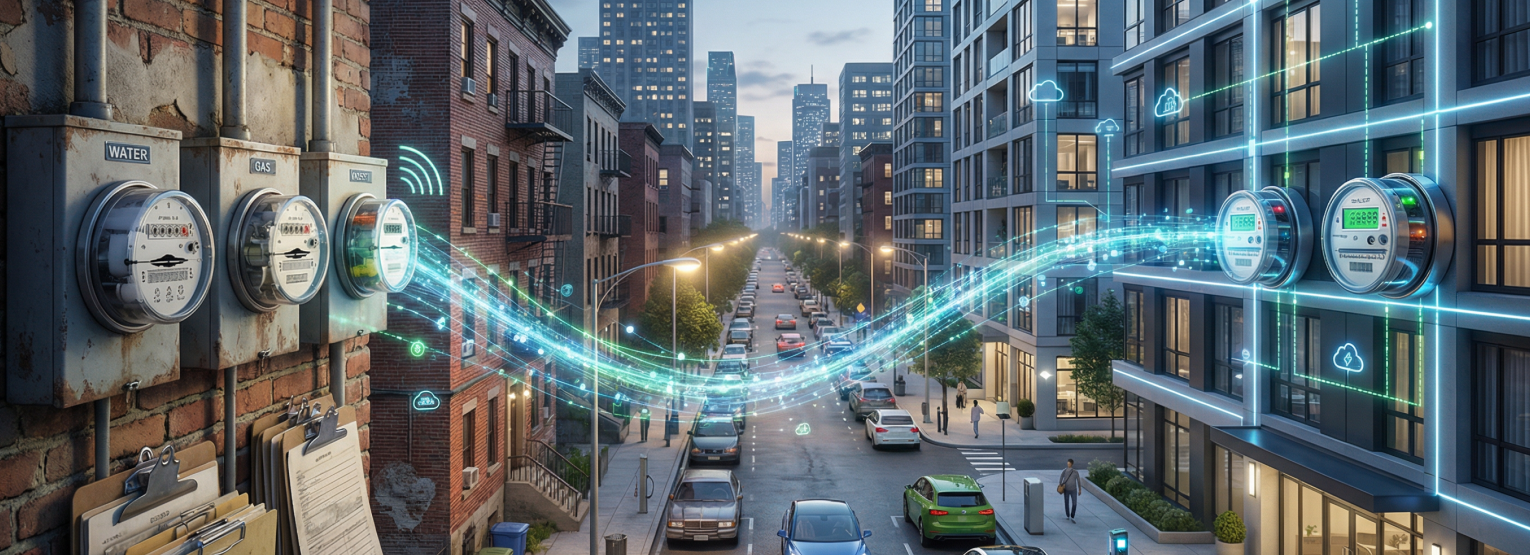
Utility providers, developers, and municipalities are increasingly considering the use of a remote metering service model. That’s because automation using smart city utility services promises transparency, reduced losses, lower labor costs, and higher customer satisfaction.
Yet in practice, many projects stall at the budgeting stage due to a lack of flexible deployment models. Purchasing thousands of wireless smart meters, installing them, building a communication network, and deploying server infrastructure and software all require significant upfront investment.
This is especially true for smaller cities, new residential developments, or homeowners’ associations, where every investment must be carefully justified. As a result, digital transformation is put on hold, even though the available technology is already mature.
This is where a model that enables risk reduction in metering projects comes into play — NB-IoT meters as a service.
The traditional approach assumes a one-time purchase of hardware and infrastructure. The “meters as a service” model works differently: instead of owning the devices, the customer receives a fully operational system for a subscription fee or a price per metering point. This fee can include the meters themselves, NB-IoT radio modules, network connectivity, a data platform, and technical support.
In essence, service-based IoT deployment brings the SaaS model from the IT world into the field of utility metering. Instead of large capital expenditures, organizations get predictable operating costs. Using smart metering as a service, projects enabling utility digitalization can start with just dozens or hundreds of points and scale gradually, without putting financial pressure on the organization.
NB-IoT is a communication standard designed specifically for the Internet of Things. It operates in licensed mobile operator bands, offers deep indoor and underground coverage, and allows IoT meters for utilities to run on batteries for up to ten years. For water, gas, heat, and electricity meters, this makes it an ideal technology.
From a service-model perspective, gradual metering modernization using NB-IoT removes another major cost item: building a private network. There is no need to deploy base stations, maintain gateways, or create proprietary infrastructure. Connectivity is provided through existing mobile operator networks, allowing projects to be launched within weeks even across dispersed locations.
For utilities, the main advantages are speed and predictability. Budgets no longer need to be tied up in hardware for years and the system begins delivering value immediately — data is collected automatically, manual input errors disappear, and anomalies in consumption or leaks are detected early.
The utility metering subscription model also enables flexible scaling, with a pilot able to start in a single district, building, or customer group. After evaluating the economic impact, coverage can be expanded. This approach reduces risk and makes decision-making at the management level much easier.
For developers, smart meters increasingly form part of a property’s value proposition. But including them directly in the price per square meter raises costs and complicates sales. The service model however allows digital metering to be implemented without significantly increasing project prices, as the system is handed over to a property manager or homeowners’ association and costs are spread over time.
Using subscription-based utility monitoring, homeowners’ associations receive a ready-to-use management tool without the need for large one-time contributions. Transparent consumption data, fewer disputes over readings, and reduced losses quickly become tangible benefits for residents. Digitalization stops being an abstract idea and instead becomes an everyday service.
NB-IoT meters as a service are not just a way to save on the initial launch, they also represent scalable metering solutions that can be used as part of a strategy for phased development. First comes the basic metering infrastructure, followed by analytics, integration with billing systems, predictive maintenance, and new digital services for end users.
This evolutionary approach to managed metering services is especially important for municipalities and large operators seeking operational efficiency for utilities, where change requires time and coordination. The ability to start small with an OPEX-based metering model that won’t put a budget at risk makes digital transformation realistic.
Smart metering deployment with a managed NB-IoT infrastructure is no longer a “project of the future” — it becomes a practical tool available today.
Was it helpful?
 163
163


Stay on top of the latest industry news
Thank you, we have received your message. Our manager will contact you shortly.


Our experts are always happy to help and promptly answer your questions. Please fill out the form to discuss your project and develop a tailored action plan.
Thank you, we have received your message. Our manager will contact you shortly.
Thank you, we have accepted your request. In the near future the responsible manager will contact you and clarify the details of the order.
Our experts are always happy to help and promptly answer your questions. Please fill out the form to discuss your project and develop a tailored action plan.
Thank you, we have received your message. Our manager will contact you shortly.