09.12.2025
 353
353
353
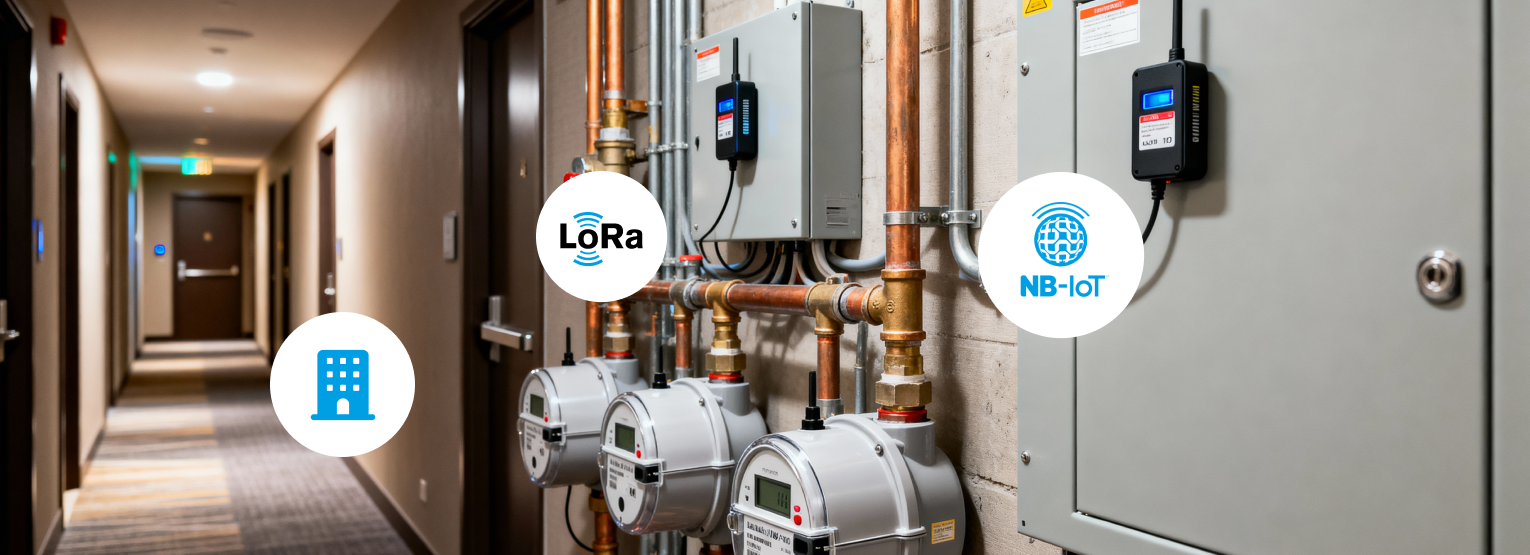
Hotel Under Control: Water and Electricity Meters on LoRaWAN/NB-IoT
353
The hotel industry is changing rapidly, with resource costs rising, competition intensifying, and guest and regulatory expectations higher than ever before.. In this environment, it’s imperative that managers not only maintain service quality but also keep tight control over property infrastructure.
One of the key tools in successfully reducing hotel utility costs is the use of smart water and electricity meters operating on LoRaWAN and NB-IoT technologies.
For a modern hotel where operational efficiency in hospitality is vital, hotel utility automation and metering is no longer a matter of prestige — it’s a practical way to optimize operational expenses, detect anomalies early, and prevent losses. And thanks to LPWAN networks, data transmission remains stable even in challenging parts of the building — from basements to technical shafts.
Complex hotel architecture often creates problems for traditional communication methods. Thick walls, multiple floors, and technical rooms weaken signals, while installing new wired infrastructure is expensive. Hotel energy monitoring using LoRaWAN and NB-IoT solve these issues with long-range connectivity and strong signal penetration. This allows meters and smart hospitality infrastructure to be placed practically anywhere without reworking building communications.
Energy efficiency is an equally important advantage. Devices operating on LPWAN networks can function on a single battery for many years. For properties where meters are often located in hard-to-reach places, implementing remote meter reading for hotels significantly reduces their maintenance costs and minimizes the need for unscheduled technician visits.
Continuous telemetry collection is at the core of digital monitoring systems. Smart meters send readings to a server or cloud platform where the data is processed using real-time consumption tracking. Hotel operators gain immediate access to consumption statistics, while the system automatically identifies peak loads, nighttime consumption patterns, and any abnormal behavior.
Analytical tools make it possible to detect hidden water leaks, electrical overloads, or inefficient use in specific buildings or zones, and with IoT-based resource management, decisions are made proactively rather than after the fact. Automatically generated reports from LoRaWAN and NB-IoT utility meters also simplify coordination with utility providers, accounting departments, and partners who require detailed consumption data.
Implementing smart LoRaWAN hotel meters produces noticeable economic benefits within the first months of operation. That’s because predictive maintenance for hotel utilities provides a clear understanding of actual consumption to help adjust tariff plans, prevent overpayments, and optimize load distribution across the hotel complex.
For large properties, the use of smart utility management for hotels can potentially achieve savings of thousands of dollars annually.
Such systems also reduce risk. Leak detection in hotels can be difficult, with a burst pipe or unnoticed water spill sometimes leading to costly repairs, damaged property, and even reputational harm. When integrated with leak sensors, smart hotel water metering instantly detects anomalies and alerts the engineering team. This minimizes potential losses and ensures a safe stay for guests.
Choosing equipment for a hotel requires attention to compatibility with LoRaWAN or NB-IoT, long battery life, and durability against moisture and temperature fluctuations. Equally important is the support for robust encryption protocols and compliance with the requirements of local utility providers. The monitoring platform becomes the core of the entire system, so its functionality and usability are crucial.
The implementation process usually includes an on-site audit, selection of suitable devices, and installation of a LoRaWAN gateway or device registration with an NB-IoT operator. This is followed by software integration and staff training. In practice, even large hotels can switch to remote metering within a few weeks — without shutting down operations or performing complex construction work.
Digital transformation of engineering infrastructure has already become the standard for hospitality businesses seeking efficiency and increased competitiveness. Smart meters based on LoRaWAN and NB-IoT provide transparent resource management, reduce operational costs, and enhance decision-making accuracy.
For utility suppliers, developers, homeowners’ associations, and municipalities seeking hotel energy efficiency solutions, smart hotel metering opens new opportunities — from better forecasting of consumption to planning long-term modernization initiatives.
An intelligent metering system using occupancy-based energy control becomes the foundation of sustainable infrastructure development. The result for businesses is efficient hotel resource monitoring that records every liter of water and kilowatt-hour accurately, reliably, and without delay.
Was it helpful?
 41
41


Stay on top of the latest industry news
Thank you, we have received your message. Our manager will contact you shortly.


Our experts are always happy to help and promptly answer your questions. Please fill out the form to discuss your project and develop a tailored action plan.
Thank you, we have received your message. Our manager will contact you shortly.
Thank you, we have accepted your request. In the near future the responsible manager will contact you and clarify the details of the order.
Our experts are always happy to help and promptly answer your questions. Please fill out the form to discuss your project and develop a tailored action plan.
Thank you, we have received your message. Our manager will contact you shortly.