24.04.2025
 1032
1032
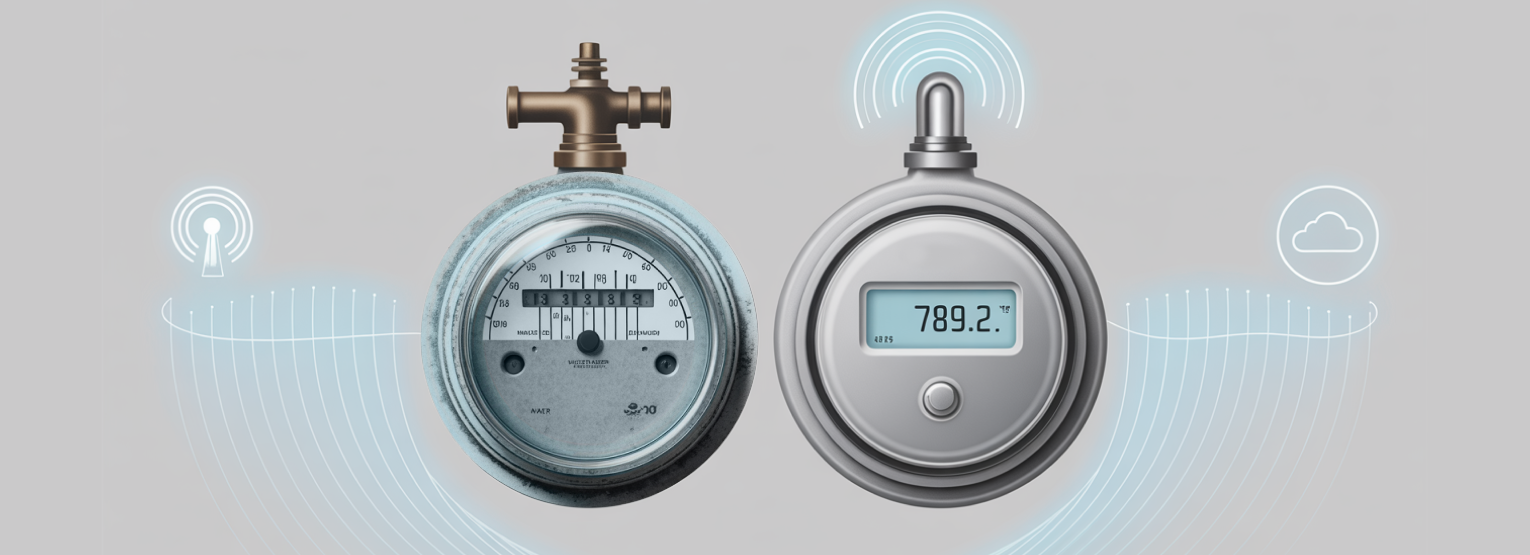
Transitioning from Traditional Meters to Smart Devices: What You Need to Know About Migrating to LoRaWAN
1032
Modern urban infrastructure and residential developments demand more efficient, transparent, and reliable methods of resource metering. Manual data collection, outdated devices, and reliance on human input no longer meet today’s expectations. Instead, smart meters capable of automatic data transmission are replacing traditional systems, helping reduce costs and improve accuracy.The shift from traditional to smart meters is more than a trend—it’s part of a broader digital transformation in utilities and property management. And at the heart of this evolution is LoRaWAN technology which, amongst numerous benefits, can provide a cost-effective metering upgrade for utility providers, municipalities, developers, and homeowners’ associations alike.
LoRaWAN (Long Range Wide Area Network) is a wireless communication protocol designed for transmitting small data packets over long distances with ultra-low power consumption. It’s ideal for working with distributed infrastructure, such as water, gas, heat, and electricity meters—particularly in dense urban environments.
Unlike cellular or Wi-Fi connections, LoRaWAN doesn’t rely on costly operator contracts. Its long-range IoT connectivity also makes it resilient to interference and capable of covering large areas with only a few base stations. This makes it especially useful for deployment in apartment buildings, industrial zones, and suburban areas where autonomy and efficiency are crucial.
Many utilities and property managers already use traditional meters equipped with pulse outputs, which can be integrated into a LoRaWAN network using adapters or compatible radio modules.
The next step involves installing LoRaWAN sensors or smart meters capable of transmitting data directly. In a LoRaWAN sensor network, devices are configured to connect with gateways and linked to a cloud platform or data collection server. For remote meter reading, equipment compatibility and network coverage are critical—some installations may require their own gateway to ensure stable connectivity.
One of the most frequent mistakes regarding LoRaWAN coverage planning is skipping the initial technical site survey. Before deployment, it’s essential to understand where signal boosters might be needed for a scalable metering system, which building materials may block transmission, and whether indoor barriers will affect radio performance.
Another misstep is overcomplicating the rollout. Some projects attempt to implement everything at once, lacking a clear plan. A more effective strategy for LoRaWAN deployment is to start with one resource—such as water—optimize the system, then gradually expand to other utilities. This phased approach helps mitigate risks and provides better control over budgeting.
Initial investments in LoRaWAN-based systems may appear higher than traditional solutions. However, they typically pay off within one to two years through savings from automated readings, reduced losses, and more accurate billing. LoRaWAN-based metering and automation also reduces billing disputes and simplifies operations for utility managers.
For developers and homeowner associations, this is also an investment in the value of their property. Modern buyers increasingly prioritize homes with digital infrastructure that offers transparency about energy consumption tracking and helps them save money. In a competitive real estate market, this can become a major selling point.
LoRaWAN-enabled smart meters are just the first step toward fully digitized building and district management. These systems can integrate seamlessly with other IoT solutions—such as leak detectors, temperature sensors, or lighting and heating controls—forming a cohesive “smart home” or even “smart city” ecosystem.
Municipalities are also turning to LoRaWAN as a backbone for city-wide IoT networks. It allows real-time remote utility monitoring of thousands of devices and facilitates quick responses to incidents like leaks, equipment failures, or unauthorized usage—ultimately making cities more efficient and responsive.
Migrating to LoRaWAN and LoRaWAN smart devices is a strategic decision that unlocks long-term benefits in efficiency, cost reduction, and innovation readiness. With the right approach, using wireless metering solutions creates a solid foundation for smarter utilities and more intelligent infrastructure.
Was it helpful?
 257


Stay on top of the latest industry news
Thank you, we have received your message. Our manager will contact you shortly.


Thank you, we have accepted your request. In the near future the responsible manager will contact you and clarify the details of the order.